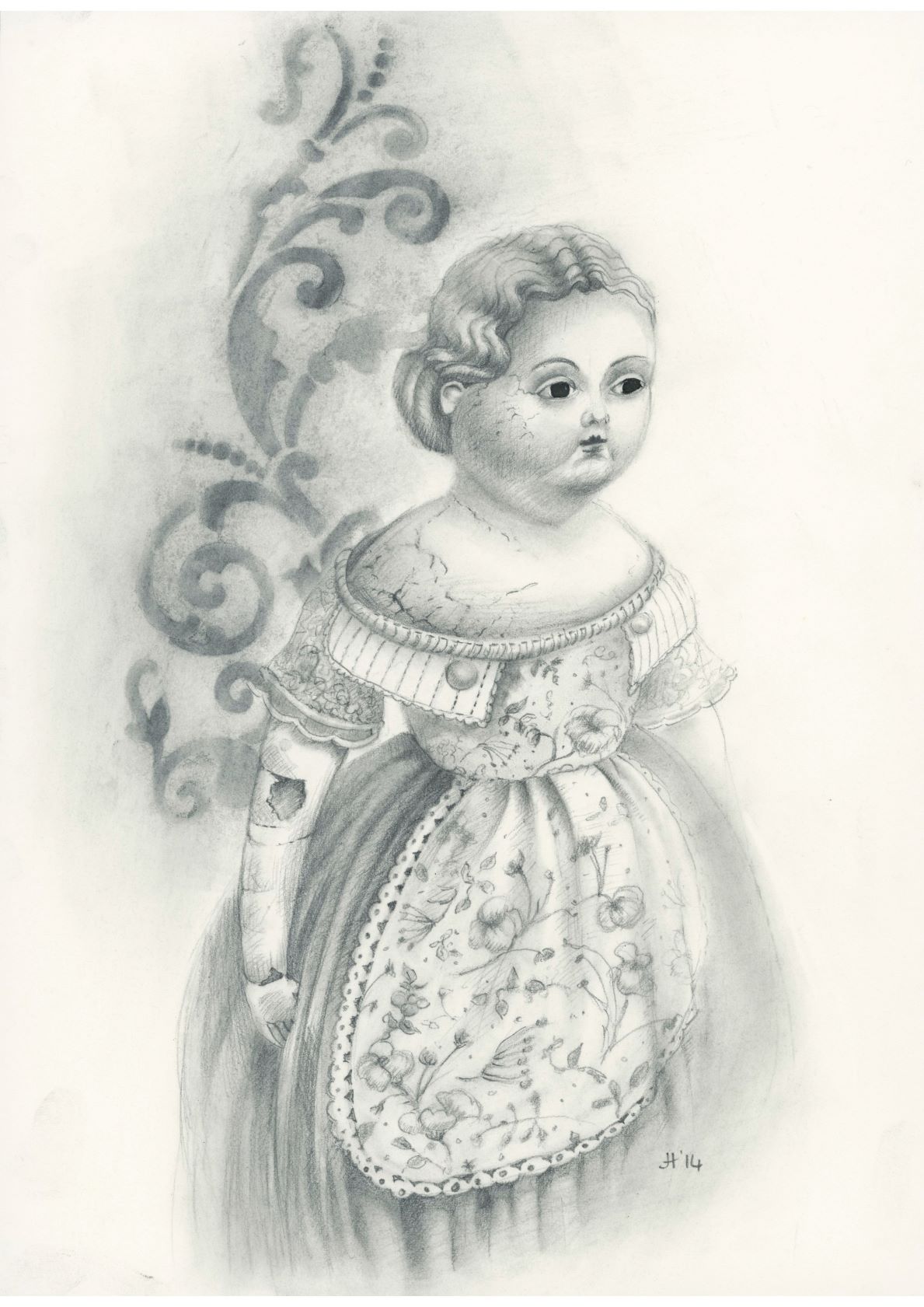
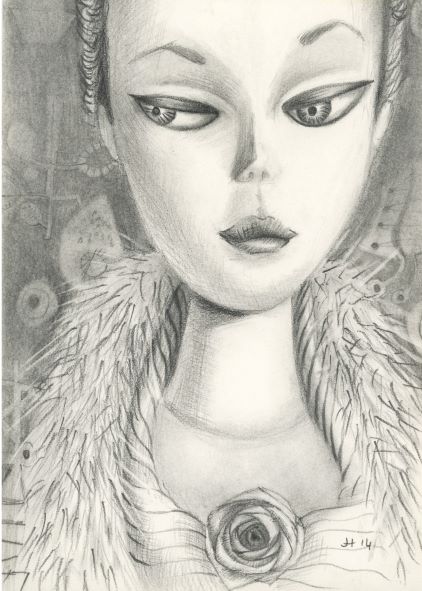
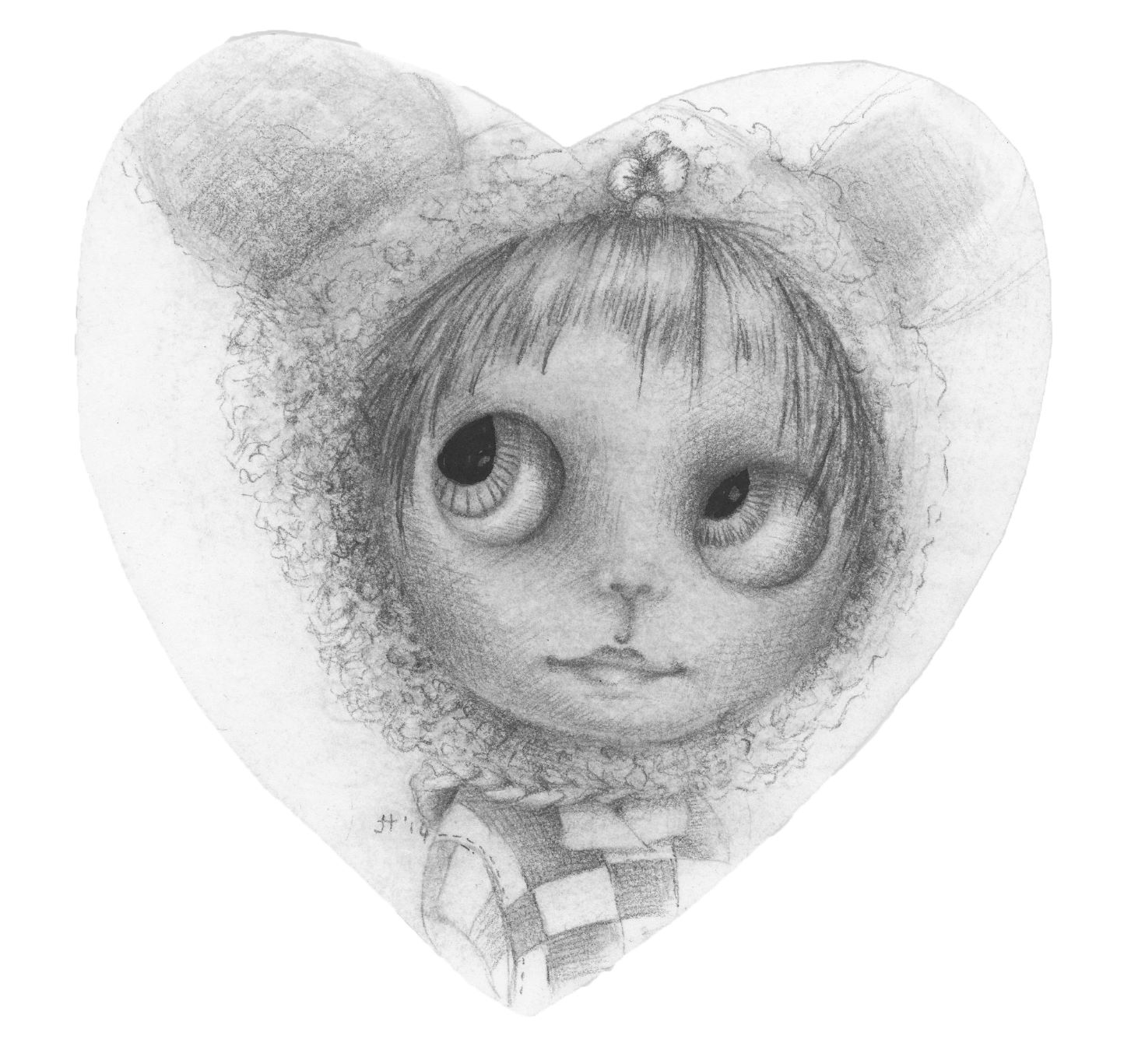
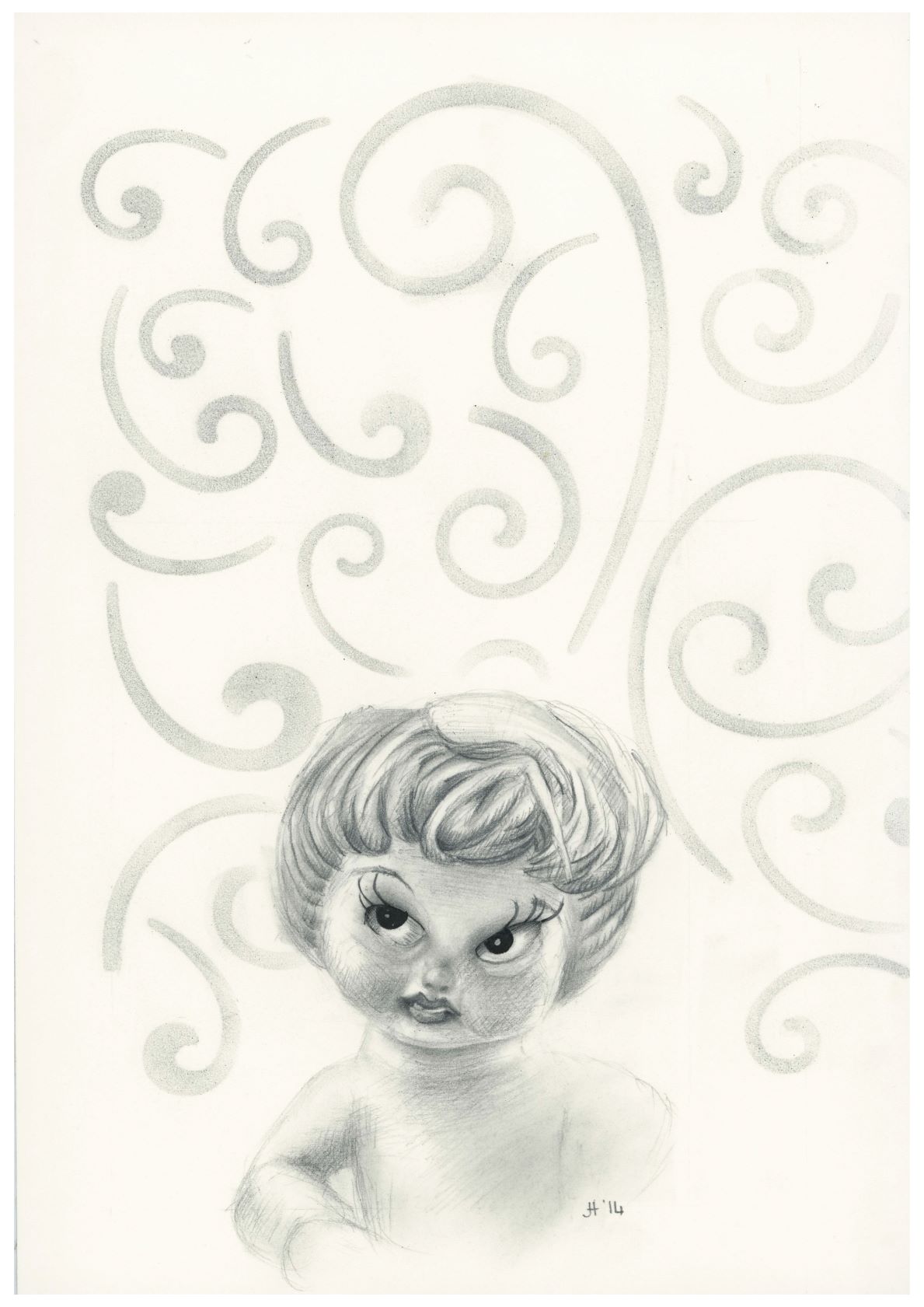
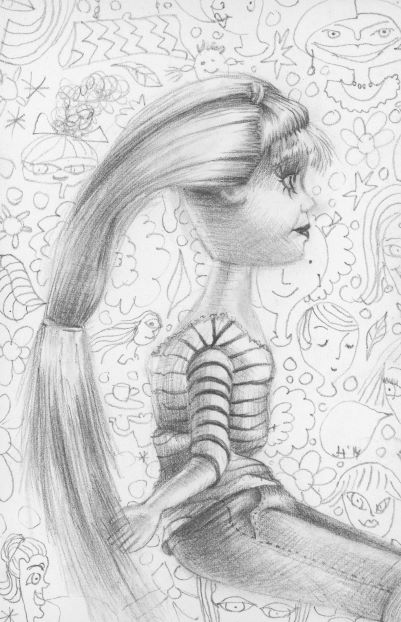
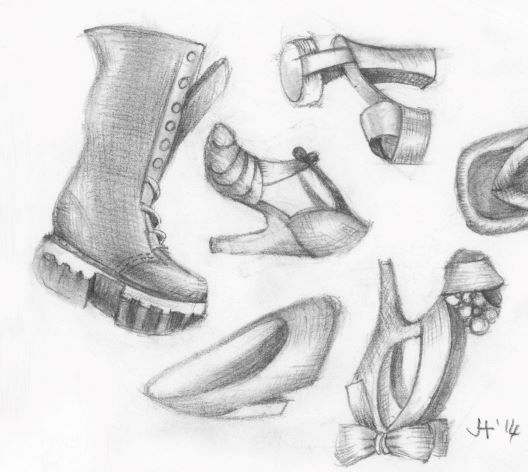
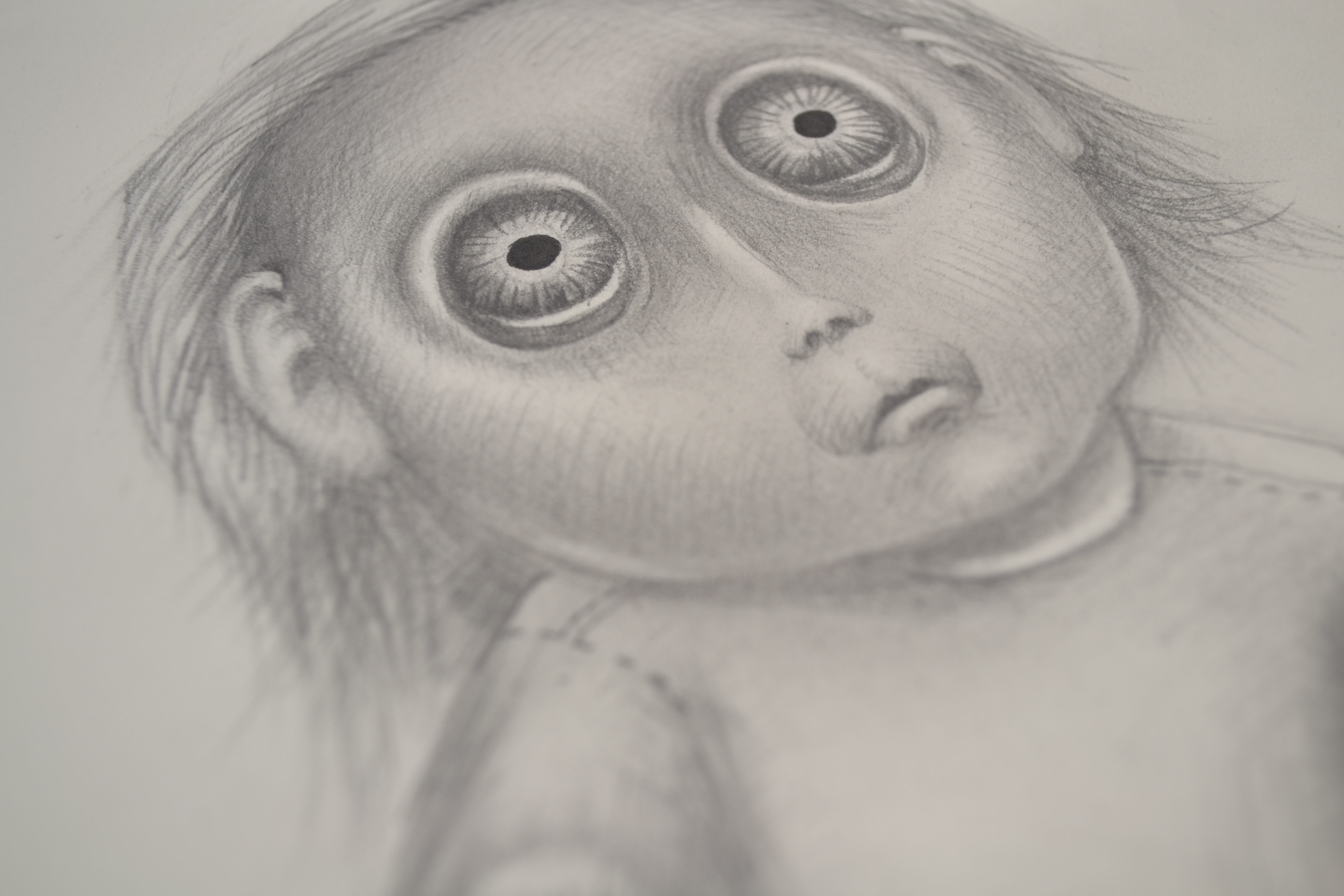
Dollgothica exhibited an exploration into perceptions and the notions around dolls. The frame and significant eyes are a part of the pieces as the ‘frame of reference’.
Did we as little girls frame our life from such as these samples?
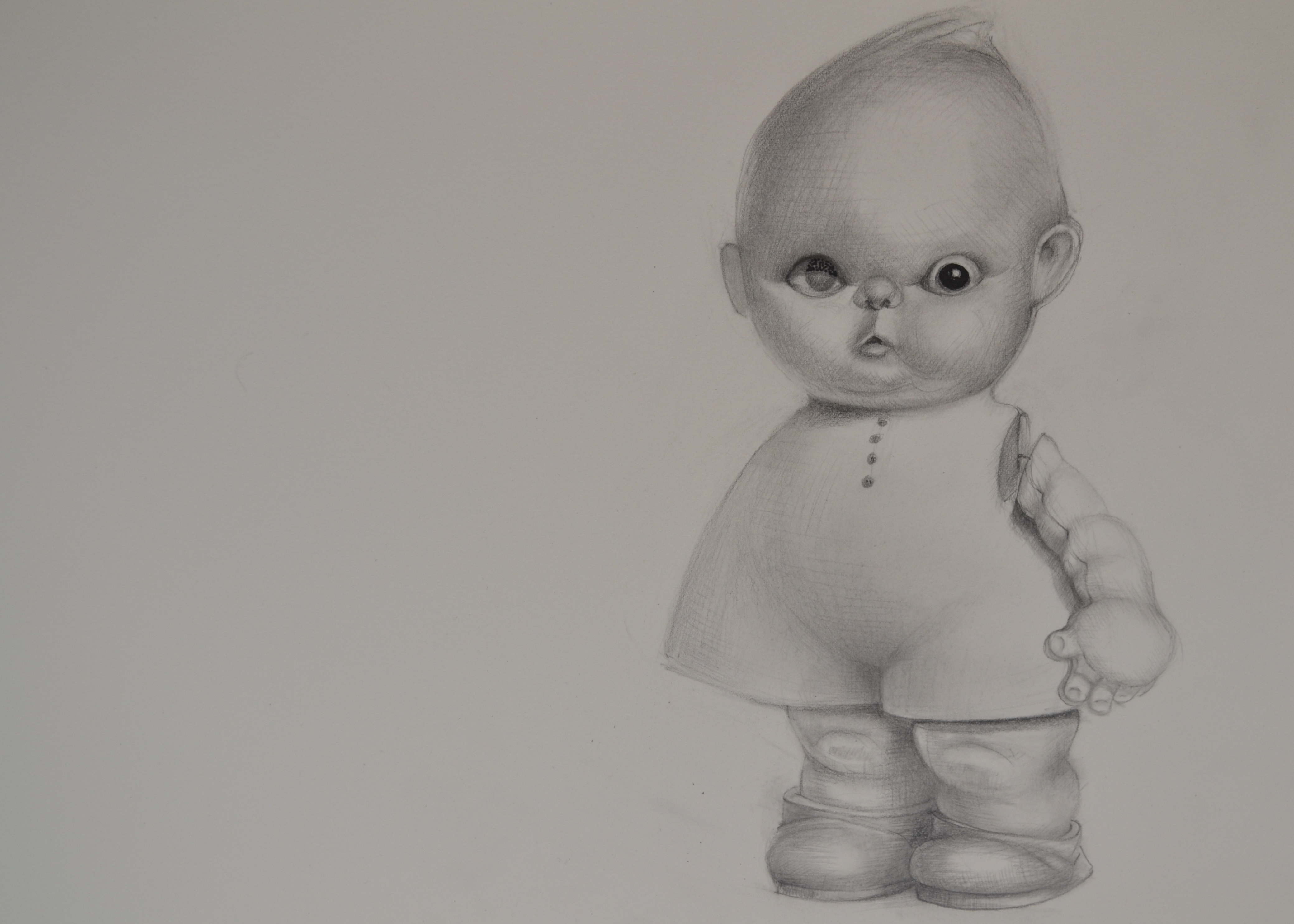

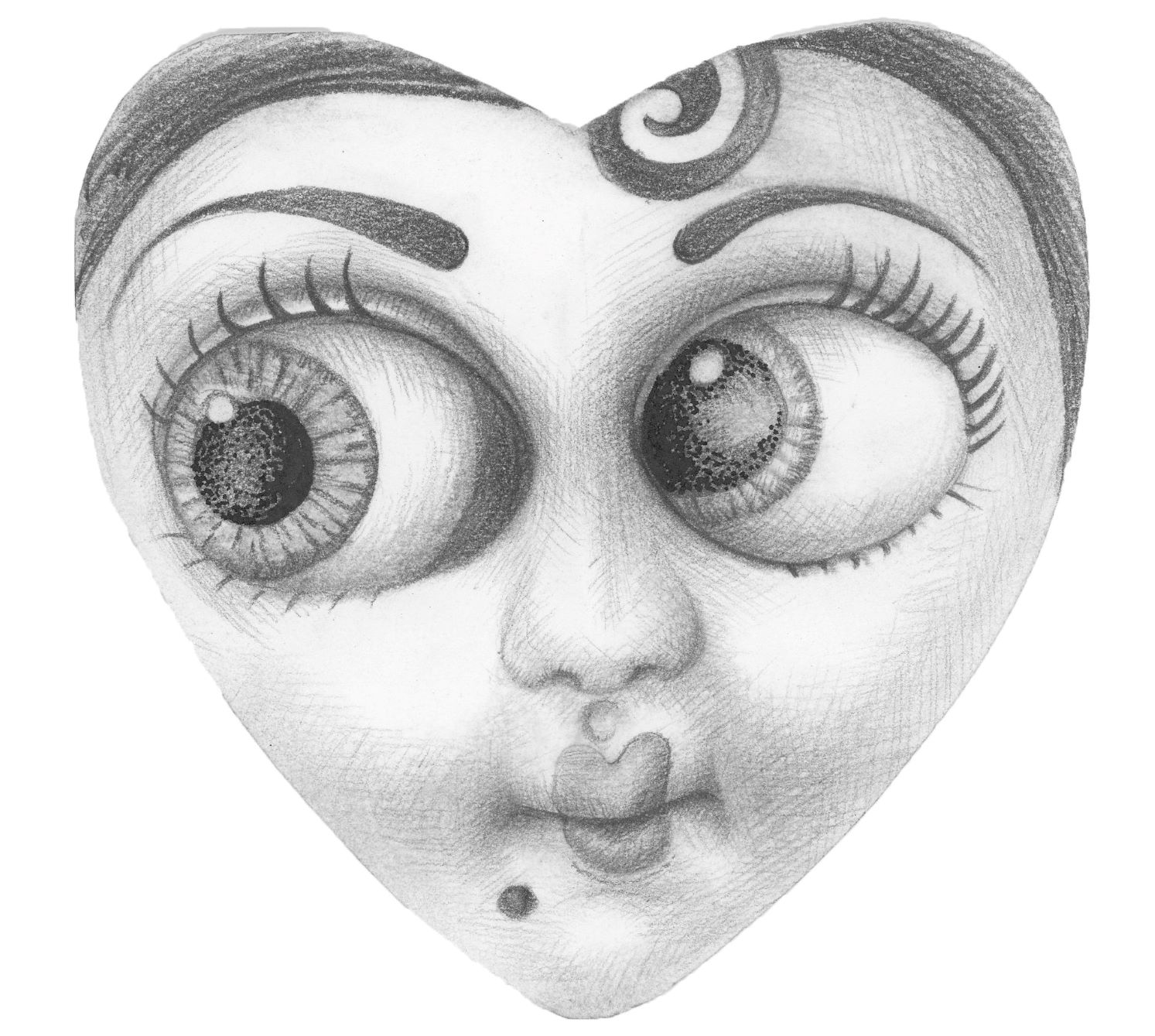
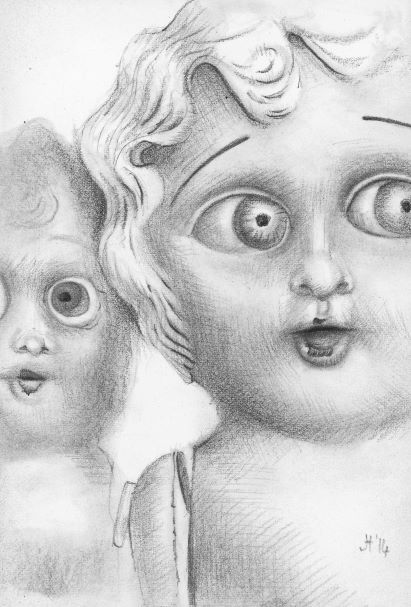







Artist Statement
What interests me is perception and language; the unique ways humans interpret and construct meaning in their world/s. Art is partly a visual language.
Lately I have been working with different constructs of childhood such as dolls. A student had remarked about dolls as horrifying things which he couldn’t look at; an aversion of a neuron non typical brain which ‘colours’ perception. They were my old dolls and my daughter’s dolls; keepsakes with nostalgic connections for me.
However, dolls when you look at them closely and historically are quite strange creatures that exist as some sort of reflection and preparation for life. They are a bit like us but not. Dolls are mostly constructs that adults make for children. Dolls are ‘Gothic’ because dolls combine notions of fragility, decay, and innocence.
As an art educator working with children who have autism and children generally, is such a joy. I discovered many esoteric ‘languages’ children have when processing life. One of my students had a code for the colour he used in his work. Another had an amazing philosophical dialogue between what he saw and what he was socialized to see and believe.
In those who struggle to relate and understand the world (like most of us and isn’t that why we create?) I discovered that language and the need to communicate is wonderfully ‘hardwired’.
Dolls evoke countless images for people – horror, fantasy, comfort and family, other worlds…
“But,” said Alice,” the world has absolutely no sense, who’s stopping us from inventing one?”
– Lewis Carroll, Alice in Wonderland.
 Janet Holmes